Introduction — Classroom Management in Nigeria: purpose and urgency
Classroom management in Nigeria is a central concern for school leaders, teachers, parents, and policy makers because orderly, focused classrooms are the foundation of learning. When classrooms are well managed, instructional time is protected, students engage meaningfully with content, and teachers can apply effective pedagogies that raise achievement. Conversely, poor classroom management undermines curriculum delivery, increases teacher burnout, and reduces student outcomes.
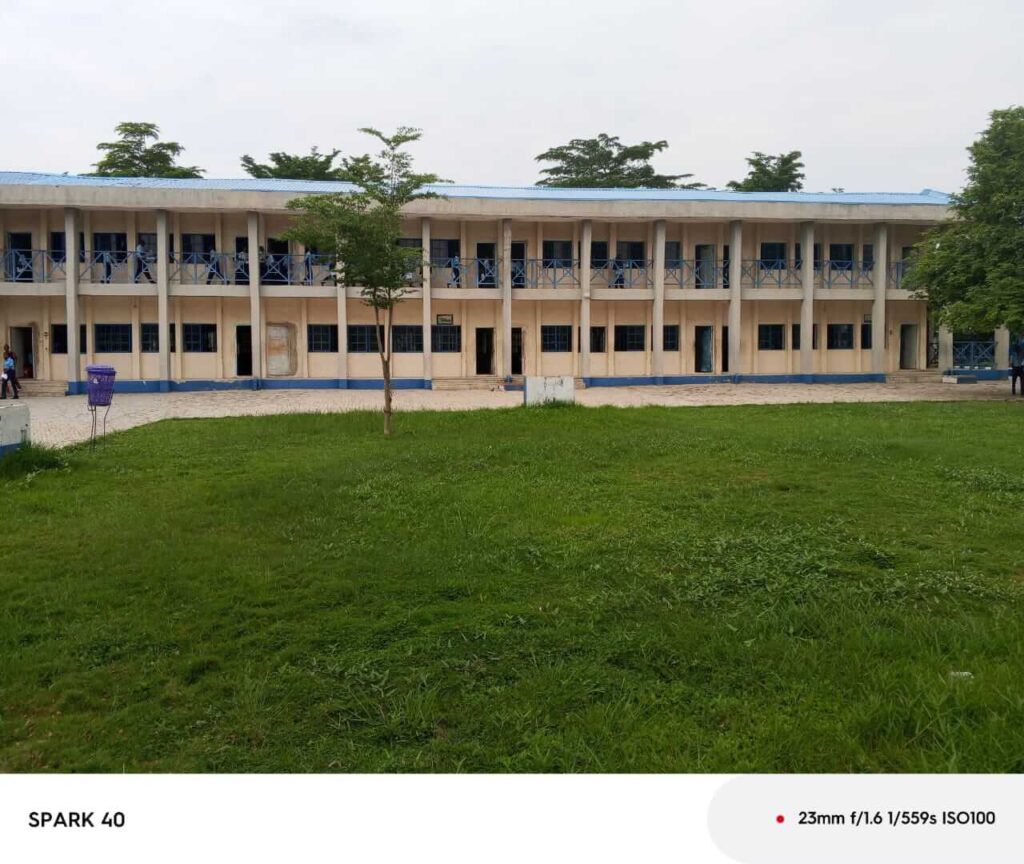
At Air Force Comprehensive School (AFCS) Yola, a deliberate approach to classroom management — one that combines institutional discipline with learner-centered practice — has been adopted to create classrooms that are orderly, respectful, and intellectually vibrant. This article examines why classroom management matters in the Nigerian context, describes AFCS Yola’s environment and practices, outlines evidence-based strategies teachers use, explores modern techniques (including digital and interactive methods), shares concrete examples from AFCS Yola, and concludes with practical recommendations for schools across Nigeria.
Why Classroom Management Matters in Nigeria
Well-structured classroom management matters for several reasons. First, instructional time is precious: preserving focused, uninterrupted time on task directly influences learning outcomes. UNESCO and other education bodies highlight that good classroom practices and time-on-task are key levers for improving learning across contexts. (learningportal.iiep.unesco.org)
Second, classroom management is linked to teacher effectiveness. Research synthesized in major practitioner guides (for example, Marzano’s evidence-based work) shows that clear rules, routines, and feedback mechanisms significantly reduce disruptive behaviour and free teachers to deliver higher-quality instruction. (files.ascd.org)
Third, in Nigeria specifically, studies demonstrate that learner-centred classroom management boosts instruction and can mitigate common challenges such as large class sizes and limited resources when combined with targeted teacher training. Several Nigerian studies recommend context-sensitive approaches that combine discipline with active learning. (richtmann.org)
In short, good classroom management is both a practical necessity and an ethical imperative: it ensures all students — regardless of background — have equitable access to meaningful learning.
AFCS Yola’s Teaching Environment and Discipline Culture
AFCS Yola is uniquely positioned to blend disciplined expectations with modern pedagogical practice. The school’s ethos — drawn from military-inspired discipline and a strong academic focus — creates a climate where routines, punctuality, and responsibility are emphasised alongside inquiry and creative work.
Key features of AFCS Yola’s environment include:
- Clear expectations: School rules, daily timetables, and classroom routines are explicit and consistently communicated to students and staff. Predictability reduces ambiguity and helps students internalize expectations.
- Structured routines: From morning assemblies to lesson transitions, routines are practised and embedded so that students know what is expected without constant redirection.
- Supportive supervision: A combination of pastoral staff (matrons, house masters/mistresses), subject teachers, and coordinators reinforce norms while attending to students’ welfare.
- Professional development: Teachers at AFCS Yola receive continuous training on classroom strategies, assessment techniques, and learner-centred methods, improving both classroom climate and pedagogy.
This combination — strong institutional expectations plus ongoing teacher support — is consistent with national guidelines that call for improved school-level management and trained staff to deliver quality education. The Federal Ministry of Education’s operational guidelines stress teacher quality and school support services as central to delivering effective schooling. (FEDERAL MINISTRY OF EDUCATION)
Core Strategies Teachers Use at AFCS Yola
AFCS Yola employs a suite of complementary strategies—rooted in research and adapted to the local context—that structure daily classroom life and promote learning. These can be grouped into five practical areas:
1. Establishing clear rules and routines
Clear, positively framed classroom rules (for example, “Respect everyone,” “Raise your hand to speak,” “Complete homework on time”) are posted and taught rather than merely enforced. Teachers spend the first weeks of each term practising routines (how to submit work, how to move between activities, expectations for group work). Evidence shows that explicit routines reduce ambiguity and misbehaviour. (bottemabeutel.com)
Practical example: At AFCS Yola, teachers use a short “Start-of-lesson” protocol—attendance, recap of previous lesson (5 minutes), learning objective, and an active starter—so each lesson begins with purpose and calm.
2. Positive behaviour reinforcement and reward systems
While discipline is emphasised, AFCS Yola balances it with recognition and rewards. Praise, house points, and certificates for punctuality, effort, and improvement help cultivate intrinsic motivation and reinforce desired conduct. Research indicates that combining clear expectations with positive reinforcement is more effective than focusing on punishment alone. (marzanoresearch.com)
Practical example: The school’s inter-house system awards points not only for sports but for classroom behaviour, project completion, and participation—making academic conduct visible and valued.
3. Active lesson design and engagement techniques
Lessons are planned using varied activities—short lecture segments, paired talk, problem solving, and practical demonstrations—to sustain attention and promote participation. Active engagement strategies reduce off-task behaviour and increase retention. UNESCO and IIEP guidance recommends learner-centred collaborative methods to improve learning experiences. (policytoolbox.iiep.unesco.org)
Practical example: Science teachers at AFCS Yola alternate brief teacher exposition with quick student experiments or think-pair-share activities to ensure sustained cognitive engagement.
4. Consistent, fair consequences and restorative approaches
Consequences for rule violations are predictable and proportionate; where appropriate, restorative conversations are used to repair harm and build reflection. This helps maintain trust between students and staff while still upholding standards.
Practical example: A student who disrupts class may be asked to reflect, apologize, or undertake a short corrective task; repeated offences involve communication with guardians and a tailored behaviour plan.
5. Ongoing assessment and feedback
Timely, formative feedback keeps students on track and clarifies expectations. Teachers use mini-quizzes, exit tickets, and regular marking cycles to detect misunderstandings and adjust instruction. High-quality feedback is repeatedly linked to improved learning outcomes in international research. (IBE — Science of learning portal)
Modern Techniques: Blending Tradition with Innovation
AFCS Yola recognises that modern classroom management should not be a choice between strict order and progressive pedagogy; instead, it integrates both. Below are techniques the school uses to bring contemporary practice into disciplined classrooms.
1. Classroom layout and environmental design
A well-organised physical space reduces friction and supports transitions. Desks arranged for group work, labelled resource stations, and clear visual displays (learning objectives, vocabulary, success criteria) help students orient themselves and reduce idle time.
2. Use of educational technology for engagement and tracking
Digital tools (interactive whiteboards, projection, educational apps, and classroom timers) are used strategically to prompt engagement and to scaffold learning. Teachers also use simple digital trackers to record behaviour patterns and adjust supports for individual students.
3. Differentiation and scaffolded tasks
Teachers design tasks at varying difficulty levels so all learners are challenged appropriately. Scaffolding prevents boredom (which often causes off-task behaviour) and helps struggling students participate meaningfully.
4. Cooperative learning structures
Group roles (recorder, reporter, timekeeper, materials manager) and rotated responsibilities cultivate positive interdependence and help manage large classes. Cooperative structures are effective in maintaining structure while developing social skills.
5. Restorative and social-emotional approaches
The Guidance & Counselling department works with teachers to incorporate brief social-emotional learning activities — such as check-ins, conflict resolution scripts, and reflective journals — which reduce persistent behavioural issues and improve classroom climate.
Evidence from Research: What Works (brief synthesis)
Multiple studies and authoritative guides recommend the combined approach AFCS Yola uses: establish clear routines, provide engaging instruction, train teachers, and reinforce positive behaviour. Marzano’s meta-analyses, for instance, emphasize aligning rules, procedures, and relationships to reduce disruptive behaviour and improve achievement. (files.ascd.org)
UNESCO and IIEP guidance further recommend learner-centred teaching, protecting instructional time, and building teacher capacity — principles that AFCS Yola applies in its daily practice. (policytoolbox.iiep.unesco.org)
Contemporary Nigerian school research also supports these conclusions: when teachers adopt learner-centred management and receive specific training on classroom interventions, outcomes improve in both behaviour and academic performance. Studies conducted in Nigerian contexts highlight the importance of teacher training and school-level policies to support positive classroom environments. (richtmann.org)
Practical Examples and Case Studies from AFCS Yola
To make the approaches above concrete, here are real-world examples and mini case studies drawn from AFCS Yola’s practice.
Case Study 1: Improving Focus in Senior Science Classes
Context: Senior science classes (SS2) had historically experienced low engagement during long practical sessions.
Intervention: Teachers redesigned lab sessions into small, focused stations with clear time limits and roles (experimenter, data recorder, safety monitor). Each student rotated through stations and submitted a concise lab report (exit ticket) at the end.
Outcome: Disruptions dropped; students completed more experiments per session; lab reports showed improved scientific reasoning. Teacher feedback confirmed a calmer, more productive lab environment.
Case Study 2: Reducing Homework Non-Submission
Context: Homework non-submission was linked to inconsistent routines and lack of parental communication.
Intervention: AFCS Yola introduced a standard homework planner protocol: teachers assigned work with clear success criteria and recorded assignments on a centrally accessible tracker. Parents received weekly summaries via the school’s communication channel.
Outcome: Homework completion rates rose significantly, and students demonstrated better time management. The transparency encouraged parental support and reduced excuses.
Case Study 3: Managing Large Mixed-Ability Classes
Context: Some Mathematics classes contained wide ability ranges, which previously led to off-task behaviour from both stronger and weaker students.
Intervention: Teachers applied differentiated tasks (three tiers) and used peer tutoring: stronger students supported peers in guided tasks, while teachers circulated to scaffold complex problems.
Outcome: Peer tutoring improved understanding for weaker students and kept higher-ability students engaged in leadership roles. Classroom disruptions decreased as students remained meaningfully engaged.
Teacher Training and Professional Development at AFCS Yola
A central reason for AFCS Yola’s success is investment in teacher professional development. Effective classroom management is not an innate talent; it is a set of practices that teachers learn and refine. The school provides:
- Induction training for new teachers on routines, discipline policy, and school culture.
- Workshops on active learning strategies, formative assessment, and behaviour management.
- Peer observation and coaching, allowing teachers to model and refine techniques together.
- Access to resources (materials based on Marzano, UNESCO guidance, and national policy) to ground practice in evidence. (files.ascd.org)
Research in Nigeria indicates that teacher training interventions focused on classroom management increase teacher confidence and reduce classroom problems. AFCS Yola’s PD model aligns with those findings by combining theory, demonstration, and supported practice. (ResearchGate)
Engaging Parents and the Community
Classroom management is sustained when schools and families collaborate. AFCS Yola engages guardians through:
- Regular communication about classroom expectations and student progress.
- Parent briefings on how to support homework routines and study habits.
- Showcasing student work (science fairs, debates) to create community pride and accountability.
The Federal Ministry of Education’s school-based management policies recommend such school-community partnerships as a means to reinforce school standards and mobilise local support. (FEDERAL MINISTRY OF EDUCATION)
Measuring Success: Metrics that Matter
AFCS Yola monitors the effectiveness of classroom management using several measurable indicators:
- Attendance and punctuality rates.
- On-task time during lessons (teacher observations and sampling).
- Homework completion and assignment quality.
- Behaviour incident frequency and nature (recorded and analysed).
- Student engagement scores from periodic surveys and formative assessments.
- Academic outcomes (term assessments, standardized exam trends).
Using a combination of quantitative data and qualitative teacher reflections enables the school to adapt strategies and focus professional development where it is most needed.
Challenges and How AFCS Yola Responds
No approach is without challenges. AFCS Yola faces realities common to many Nigerian schools: varying home backgrounds, occasional resource constraints, and the need to sustain consistent practice across many staff members. The school addresses these challenges by:
- Prioritizing teacher induction and continuous in-service training.
- Using low-cost classroom strategies (clear routines, cooperative learning) that do not rely solely on technology.
- Strengthening pastoral systems to support at-risk students with targeted mentoring.
- Applying data-driven interventions: where patterns emerge (e.g., repeated disruptions in a class), leadership works with the teacher to trial specific approaches and monitor impact.
Research from Nigerian contexts suggests these practical, school-led adaptations are critical to lasting improvement. (richtmann.org)
Policy Alignment and the Broader Nigerian Landscape
AFCS Yola’s approach aligns with national and international guidance. The Federal Ministry of Education’s handbook and the National School-Based Management policy emphasise standards, teacher quality, and community involvement — all integral to effective classroom management. (FEDERAL MINISTRY OF EDUCATION)
Globally, UNESCO and the IIEP recommend learner-centred practices, protected instructional time, and teacher capacity building — principles AFCS Yola operationalizes. (policytoolbox.iiep.unesco.org)
Adopting these standards in the Nigerian context requires both fidelity to evidence and thoughtful local adaptation — which AFCS Yola demonstrates through its disciplined yet student-centred culture.
Practical Recommendations for Schools in Nigeria (Actionable Steps)
Based on AFCS Yola’s experience and the research base, here are practical recommendations schools can adopt:
- Define and teach a small set of clear rules (3–6 rules) and practice routines at the start of the term.
- Structure each lesson with a brief starter, clear learning objective, active work, and a formative exit task.
- Use positive reinforcement (praise, points, certificates) alongside consistent consequences.
- Differentiate tasks to maintain engagement across ability ranges and use peer tutoring strategically.
- Provide regular PD focused on classroom management strategies and active learning methods.
- Collect simple data: attendance, homework rates, incident logs, and quick student engagement surveys to guide improvement.
- Engage parents with regular communication and opportunities to see student work.
- Invest in pastoral care so behaviour is seen through the lens of welfare and learning support.
- Use restorative dialogues to repair relationships rather than relying solely on punitive measures.
- Celebrate successes—publicly recognise improvements in conduct and engagement to build momentum.
These steps are practical, low-cost, and supported by evidence from both global and Nigerian research. (files.ascd.org)
Conclusion — Classroom Management in Nigeria as a Lever for Equity and Quality
Classroom management in Nigeria is not a narrow technical skill; it is a strategic lever for equity, quality, and social development. AFCS Yola’s experience demonstrates how disciplined structures, combined with learner-centred teaching and well-trained teachers, create classrooms where all students can learn.
By emphasizing routines, positive reinforcement, active engagement, and continuous teacher development, AFCS Yola protects instructional time and builds the habits of mind students need for future success. The school’s approach aligns with national policy and international best practice, and it provides a practical model other Nigerian schools can adapt.
Call to Action: If you are a school leader, teacher, or guardian interested in strengthening classroom management at your institution, start small: pick one routine to teach, schedule one professional development session on engagement techniques, and begin tracking one simple metric (for example, homework completion). For support or to learn more about AFCS Yola’s practices, contact the school’s academic coordinator or attend an open-day workshop.
References & Further Reading
- Federal Ministry of Education (Nigeria). Federal Ministry of Education Handbook — operational guidelines and standards. (FEDERAL MINISTRY OF EDUCATION)
- Marzano, R. J. Classroom Management That Works: Research-Based Strategies for Every Teacher (ASCD). (files.ascd.org)
- UNESCO IIEP. Classroom practices / Instructional time and classroom management guidance. (policytoolbox.iiep.unesco.org)
- Bala, E-Y. Improving Classroom Instructions Through Effective Classroom Management Approach in Nigeria. (Research on learner-centred approaches in Nigeria). (richtmann.org)
- Ebimiere, A.O. Classroom Management and Students’ Academic Performance in Rivers State (Nigeria). (Study linking reward systems and academic performance). (casirmediapublishing.com)